
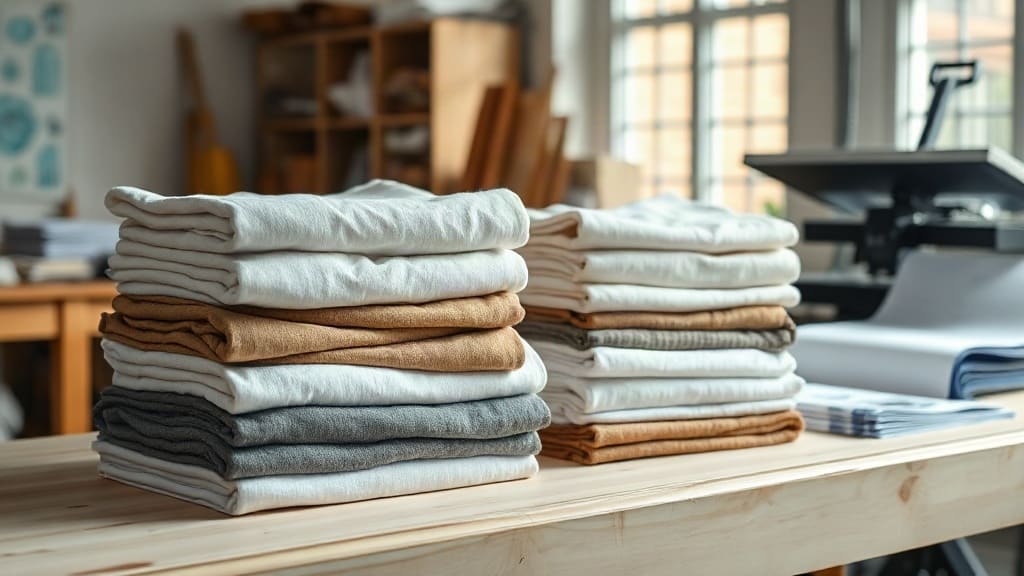
Walk into any print shop and you will hear the same argument at least once a month: is it the transfer or the shirt that failed? Nine times out of ten, the honest answer is both, but the shirt usually gets blamed last. Anyone who has pressed a few thousand garments knows the truth. The smart blanks you choose quietly decide how your print looks on day one, day thirty, and day three hundred. A perfect transfer on a bad blank is a temporary win. A good transfer on the right blank becomes a walking advertisement for your shop.
DTF printing has changed the game because it sticks to almost anything with a printable surface. Cotton, poly blends, canvas, even some nylons. That flexibility is exactly why blank selection matters more than ever, not less. When your transfer can go on anything, the question shifts from "will it stick?" to "will it still look good after twenty washes?" That is where the blank stops being a background detail and starts being half the product.
What Actually Makes a Blank "Smart" for DTF
The phrase smart blanks gets thrown around loosely, so let us be specific. A smart blank is not simply a cheap tee or a trendy brand. It is a garment whose fiber content, weave, finish, and shrinkage behavior all work in favor of a heat-applied transfer. Four things separate a smart blank from a frustrating one.
- Fiber content that accepts adhesive film. High cotton counts and cotton-poly blends in the 50/50 to 100% cotton range tend to hold DTF powder adhesive best. Pure synthetics can work, but they often need lower press temperatures and shorter dwell times.
- A tight, even weave. Loose knits let the transfer sink into the fabric valleys, which makes fine details look fuzzy. A denser knit keeps the print sitting on the surface where it belongs.
- Minimal shrinkage after the first wash. A blank that shrinks two sizes pulls the print with it and creates that cracked, stressed look nobody wants.
- Consistent dye lots and finish. If you are printing a run of fifty shirts, you need all fifty to press the same way. Inconsistent blanks mean inconsistent results, and your customers will notice.
None of this is exotic. It is just the stuff that separates a blank you can build a business on from a blank you regret buying by the case.
Why Shaka Wear Keeps Showing Up in Print Shops
Ask around any busy DTF shop and Shaka Wear comes up fast. The brand built its reputation on heavyweight cotton tees with a boxy, streetwear-friendly cut, and that profile happens to be close to ideal for heat-applied graphics. The fabric is dense enough that transfers do not sink in, the surface is smooth enough for fine line work, and the garment holds its shape after repeated washing.
There is a practical reason beyond print quality. Shaka Wear blanks tend to run consistent from batch to batch, which matters when you are printing the same design for a client across multiple orders. If the first run looks great and the second run looks slightly different, you have a problem. Heavyweight, tightly knit blanks reduce that risk because there is less variation for the transfer to react to.
One caveat worth knowing: heavyweight cotton takes a little more heat and pressure to get a clean bond than a thin fashion tee. That is not a flaw, it is just how the material behaves. Adjust your press settings and the results speak for themselves.
How DTF Transfers Behave on Different Blank Types
100% Cotton
Cotton is the friendly default. It grips the adhesive powder well, takes mid-range press temperatures comfortably, and gives a soft hand feel once the transfer cools. The tradeoff is shrinkage. Pre-shrunk cotton is worth the small upcharge if you are printing fitted garments or selling to customers who wash hot.
Cotton-Poly Blends
Blends in the 50/50 range are the workhorse of the promotional world. They resist shrinking, hold color well, and press cleanly at slightly lower temperatures. If you are printing in bulk for events or uniforms, blends usually give you the most predictable results per dollar.
Tri-Blends and Heathers
These look great but demand attention. The textured surface can create a slightly vintage feel under the print, which some customers love and others do not. Press them gently, and test a sample before committing to a full run.
Performance Polyester
Poly is the tricky one. It can scorch, and some DTF films do not bond as aggressively to slick synthetic surfaces. Lower your temperature, shorten your dwell time, and always do a wash test before you sell a batch. A blank that fails a wash test is not a blank, it is a refund waiting to happen.
Press Settings That Match Your Blank
Most DTF failures trace back to one of three things: temperature, pressure, or time. Get those right for the specific blank in front of you and the rest is easy. Here is a starting framework you can tune from.
- Cotton and heavy blends: around 325°F, medium to firm pressure, 12 to 15 seconds.
- Tri-blends and lighter knits: around 300°F, medium pressure, 10 to 12 seconds.
- Polyester: around 280°F, light to medium pressure, 8 to 10 seconds, with a cover sheet to protect the surface.
These are starting points, not laws. Every press runs a little differently, and every blank has its own personality. The shops that get consistently great results are the ones that keep a notebook, test each new blank before running a full order, and adjust rather than assume.
Wash Testing: The Step Most People Skip
If you only adopt one habit from this article, make it this one. Before you print fifty shirts, print one. Wash it inside out in cold water, tumble dry low, and inspect it. Then wash it again. And again. A blank that survives ten washes with a sharp print is a blank you can build a product line around. A blank that starts cracking at wash three is a blank you should never buy again.
Wash testing also tells you something about the blank itself, not just the transfer. How much did it shrink? Did the collar lose shape? Did the color bleed? These are the details that separate a garment customers keep from a garment customers tolerate.
Matching Blanks to Your Customer, Not Just Your Press
There is a marketing angle here too. The blank you choose sends a signal. A heavyweight cotton tee says premium and durable. A soft tri-blend says fashion and comfort. A budget blend says value and volume. None of those are wrong, but they need to match the story you are telling. A premium design on a flimsy blank undercuts the design. A simple logo on a heavyweight blank can look surprisingly high-end.
This is why experienced printers keep a small library of trusted blanks on hand. Two or three cotton options, a couple of blends, and one reliable poly for performance wear. You learn each one's quirks, and your dtf transfers stop being a gamble and start being a repeatable process.
Frequently Asked Questions
What are the best smart blanks for DTF printing?
Heavyweight 100% cotton and 50/50 cotton-poly blends are the safest bets. They hold the adhesive well, resist shrinking, and keep fine details sharp. Brands like Shaka Wear are popular because their dense knit and consistent sizing suit heat-applied graphics.
Can I use DTF transfers on polyester shirts?
Yes, but with adjustments. Lower the press temperature to around 280°F, reduce dwell time, and use a cover sheet. Always wash test a sample first, because some polyester finishes resist bonding more than cotton does.
Why do my DTF prints crack after a few washes?
Cracking usually comes from one of three causes: the blank shrank, the press temperature was too high or too low, or the garment was washed in hot water. Pre-shrunk blanks and correct press settings solve most of it.
Do heavier blanks really make prints last longer?
They often do, because a denser weave keeps the transfer sitting on the surface instead of sinking into the fabric. That reduces stress on the print during stretching and washing, which means fewer cracks over time.
How many washes should a DTF print survive?
A well-pressed transfer on a good blank should stay sharp through dozens of cold-water washes. If it starts fading or cracking within five washes, something in your process or your blank choice needs attention.